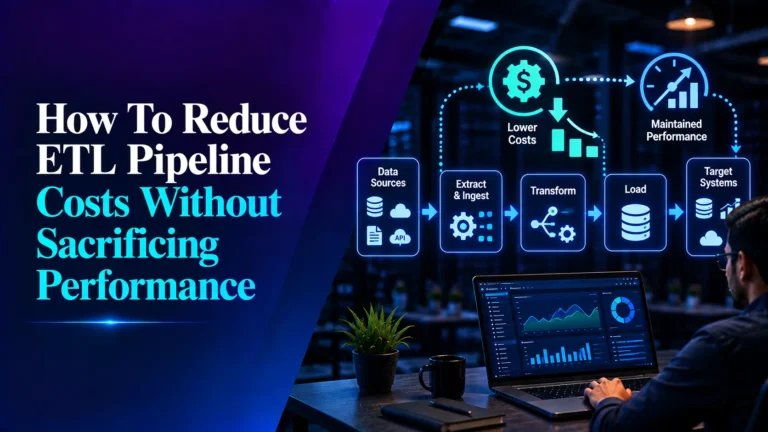


Data integration plays a huge role in modern data management. With the increasing amount of data flowing into organizations from multiple sources, it’s essential to have a streamlined way to bring everything together. That’s where ETL (Extract, Transform, Load) and ELT (Extract, Load, Transform) come into play. These are the two main approaches to handling and integrating data.
Now, ETL has been around for a while. It’s a traditional method where you first extract data from different sources, transform it into the right format or structure, and then load it into your target system. ELT, on the other hand, flips the last two steps. You extract the data, load it as-is into a storage system, and then transform it later, usually once it’s already sitting in a data warehouse or cloud storage.
Choosing between ETL and ELT isn’t just about what’s newer or faster. It really comes down to your specific needs—like the type of data you’re working with, the speed of your workflows, and your infrastructure. Both approaches have their strengths, so it’s all about figuring out which one aligns with your organization’s data strategy.
Key Differences Between ETL and ELT
When deciding between ETL and ELT, it’s important to understand how they differ in key areas like transformation timing, processing location, and performance.
Let’s break down the key differences between ETL and ELT:
Data Transformation Timing
The main distinction here is when the data gets transformed. With ETL, transformation happens before loading. You extract the data, clean or format it, and then push it into the destination system. ELT does the opposite: you extract and load the raw data first, then transform it afterward, typically once it’s in a cloud data warehouse or similar platform.
Data Processing Location
In ETL, data transformation usually happens on-premises or within your own infrastructure before it’s loaded into a target system. ELT leverages cloud-based platforms for transformation. With ELT, you’re typically using the processing power of the cloud to handle those transformations, which often leads to better scalability.
Performance Considerations
ETL might perform better for smaller datasets or when working with more structured, controlled data flows. However, as data volumes increase, the need to transform everything upfront can slow things down. ELT, by using cloud infrastructure, often handles large data volumes more efficiently, especially when the transformation can be deferred to later, taking advantage of more powerful cloud resources.
Scalability
ETL can struggle to scale as data grows. The upfront transformation requires significant compute power, and if your on-premises infrastructure isn’t ready for that load, it can cause bottlenecks. ELT, being cloud-based, scales much more easily. Since the cloud can handle massive amounts of data, ELT can better support growing data needs without choking the system.
Data Latency
ETL is typically slower when it comes to data freshness. Because the data is transformed before being loaded, there’s a delay before the transformed data is available for analysis. ELT, on the other hand, offers fresher data because it loads the raw data right away, allowing analysts to start querying it immediately. This makes ELT a better fit for real-time or near-real-time data analysis needs.
[ Are you looking Data Integration Services]
When to Use ETL
- Legacy Systems: ETL is a suitable choice for organizations that rely on legacy systems or traditional data warehouses where data transformation needs to be done before loading. These environments often have well-defined data schemas, making ETL the most efficient way to handle data processing.
- Structured Data: If your data is already structured or semi-structured, ETL allows you to perform detailed data cleansing and transformation before it’s loaded into the destination, ensuring data quality and consistency.
- Compliance and Data Governance: Industries like finance, healthcare, and government with strict regulatory requirements often use ETL because it allows them to control data transformation and ensure that sensitive information is handled securely before it reaches the target system.
- Batch Processing Needs: ETL is ideal for scenarios where data is processed in batches and doesn’t require real-time updates. It’s commonly used in environments where data is collected, transformed, and loaded on a scheduled basis (e.g., overnight processing).
- Pre-Defined Data Requirements: If the data requirements and schema are clearly defined and unlikely to change frequently, ETL’s upfront transformation process is a reliable way to ensure data integrity and maintain a consistent data pipeline.
When to Use ELT
- Big Data Environments: ELT is the preferred approach for handling large volumes of data, particularly when working with big data platforms like Apache Hadoop, Google BigQuery, or Amazon Redshift. These platforms are designed to perform complex data transformations efficiently after loading the data.
- Cloud-Based Platforms: When leveraging cloud data warehouses and data lakes, such as Snowflake or Azure Synapse, ELT takes advantage of the scalability and processing power of these platforms to transform data faster and at a lower cost.
- Real-Time Data Analytics: If your organization requires real-time or near-real-time data processing, ELT is the better choice. It allows raw data to be immediately available for analysis, enabling faster insights and data-driven decision-making.
- Unstructured and Semi-Structured Data: ELT is well-suited for environments dealing with unstructured or semi-structured data, like JSON files, log files, or data streams. The flexibility of transforming this data after loading provides a more agile way to handle diverse data formats.
- Dynamic and Evolving Data Requirements: In situations where the data schema constantly changes, ELT’s approach of transforming data post-loading allows for greater adaptability. This flexibility makes it easier to modify data transformations without disrupting the overall data pipeline.
[ Good Read: Data Engineering Trends ]
Conclusion
ETL and ELT have their strengths and are suited to different data integration needs. While ETL is ideal for structured data, legacy systems, and compliance-driven environments, ELT excels in big data, cloud-based platforms, and real-time analytics. There’s no one-size-fits-all answer—choosing between them depends on your specific data requirements and technology stack. By understanding your data needs and the capabilities of your infrastructure, you can make a well-informed decision that aligns with your organization’s goals.