
Building a Scalable And Cost-Efficient BigQuery Platform: Architecture, Practices & Lessons
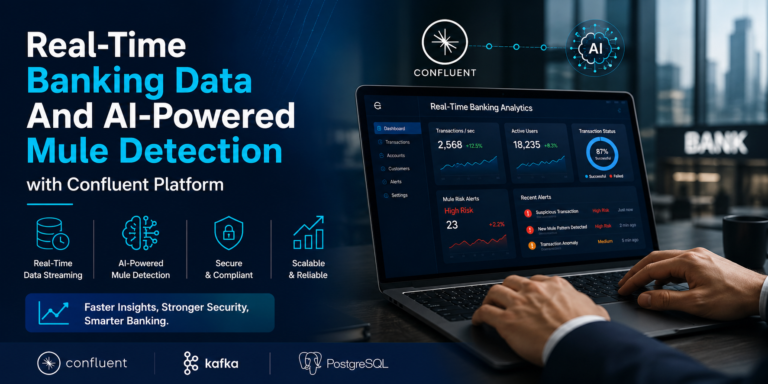
As data platforms evolve from proof-of-concept pipelines to business-critical systems, scaling BigQuery requires more than writing efficient SQL. Without the right architectural choices, governance, and monitoring, organizations often face unpredictable costs, query slowdowns, and operational instability.

This blog outlines a set of platform-level engineering decisions and best practices adopted to run BigQuery at scale—focused on performance, cost optimization, security and observability. Each practice is backed by real-world implementation examples. Continue reading “Building a Scalable And Cost-Efficient BigQuery Platform: Architecture, Practices & Lessons”

Stream PostgreSQL Data to S3 via Kafka Using JDBC and S3 Sink Connectors : Part 1
Step 1: Set up PostgreSQL with Sample Data

Before you can source data from PostgreSQL into Kafka, you need a running instance of PostgreSQL with some data in it. This step involves:

  • Setting up PostgreSQL: You spin up a PostgreSQL container (using Docker) to simulate a production database. PostgreSQL is a popular relational database, and in this case, it serves as the source of your data.
  • Create a database and tables: You define a schema with a table (e.g., users) to hold some sample data. The table contains columns like id, name, and email. In a real-world scenario, your tables could be more complex, but this serves as a simple example.
  • Populate the table with sample data: By inserting some rows into the users table, you simulate real data that will be ingested into Kafka.

Continue reading “Stream PostgreSQL Data to S3 via Kafka Using JDBC and S3 Sink Connectors : Part 1”

ETL vs. ELT: Which Data Integration Approach is Right for You?
Data integration plays a huge role in modern data management. With the increasing amount of data flowing into organizations from multiple sources, it’s essential to have a streamlined way to bring everything together. That’s where ETL (Extract, Transform, Load) and ELT (Extract, Load, Transform) come into play. These are the two main approaches to handling and integrating data.

Continue reading “ETL vs. ELT: Which Data Integration Approach is Right for You?”

Using Apache Flink for Real-time Stream Processing in Data Engineering

Businesses need to process data as it comes in, rather than waiting for it to be collected and analyzed later.

This is called real-time data processing, and it allows companies to make quick decisions based on the latest information.

Apache Flink is a powerful tool for achieving this. It specializes in stream processing, which means it can handle and analyze large amounts of data in real time. With Flink, engineers can build applications that process millions of events every second, allowing them to harness the full potential of their data quickly and efficiently.

Continue reading “Using Apache Flink for Real-time Stream Processing in Data Engineering”

Advanced-Data Modeling Techniques for Big Data Applications

As businesses start to use big data, they often face big challenges in managing, storing, and analyzing the large amounts of information they collect.

Traditional data modeling techniques which were designed for more structured and predictable data environments, can lead to performance issues, scalability problems, and inefficiencies when applied to big data.

The mismatch between traditional methods and the dynamic nature of big data causes these issues, resulting in slower decision-making, higher costs, and the inability to fully leverage data.

For many organizations, these challenges result in slower decision-making, higher costs, and the inability to fully use their data.

In this blog, we will explore the sophisticated data modeling techniques designed for big data applications.

Continue reading “Advanced-Data Modeling Techniques for Big Data Applications”