

The cloud has become the backbone of modern businesses, but with great power comes great responsibility. Despite its advantages, cloud environments often hide critical vulnerabilities that cybercriminals are eager to exploit. From misconfigurations to data leaks, the risks can be catastrophic if left unchecked. A recent report revealed that over 40% of data breaches originate from cloud misconfigurations alone.
In this blog, we’ll explore the 5 most critical vulnerabilities in cloud deployments and provide simple yet effective strategies to fix them. Let’s ensure your cloud infrastructure stays secure while delivering the agility your business needs.
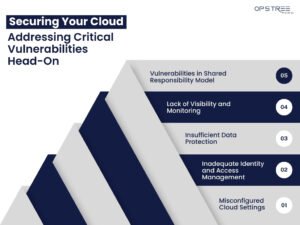
1. Misconfigured Cloud Settings
The Vulnerability
Misconfigured cloud settings are one of the most common and dangerous vulnerabilities. These occur when services are deployed with default settings, unnecessary privileges, or insufficient security controls. Examples include leaving storage buckets open to the public, inadequate access control policies, and unencrypted sensitive data.
Why It’s Critical
Misconfigurations expose sensitive data to unauthorized users, leading to data breaches, compliance violations, and reputational damage. According to industry reports, a significant percentage of cloud-related breaches are attributed to such errors.
How to Fix It
- Automated Tools: Use automated configuration management tools like AWS Config, Azure Security Center, or Google’s Policy Troubleshooter to detect and rectify misconfigurations.
- Encryption: Ensure that all data, both in transit and at rest, is encrypted using industry-standard protocols.
- Least Privilege Principle: Adopt a least-privilege access model to limit user permissions.
- Regular Audits: Perform regular security audits to identify and address configuration issues promptly.
2. Inadequate Identity and Access Management (IAM)
The Vulnerability
Weak or improperly managed IAM policies can lead to unauthorized access to cloud resources. This includes using weak passwords, inadequate multi-factor authentication (MFA), and overly broad access permissions.
Why It’s Critical
Compromised credentials or insufficient IAM practices can allow attackers to access sensitive data or disrupt operations.
How to Fix It
- Multi-Factor Authentication: Enforce MFA for all users to add an extra layer of security.
- Strong Password Policies: Implement robust password policies that include complexity, expiration, and reuse limitations.
- Role-Based Access Control (RBAC): Use RBAC to ensure users only have access to resources they need for their roles.
- Regular Reviews: Periodically review IAM policies to remove unnecessary privileges or inactive accounts.
You Should Know This – Mitigating vulnerabilities like misconfigured cloud settings or insufficient data protection, cloud scalability solutions can ensure that additional resources are configured with the correct security protocols, reducing the risk of misconfigurations and unauthorized access.
3. Insufficient Data Protection
The Vulnerability
Cloud deployments often house sensitive data, including personally identifiable information (PII), intellectual property, and financial records. Failure to implement proper data protection measures can lead to unauthorized access, theft, or data loss.
Why It’s Critical
A breach of sensitive data can result in severe legal, financial, and reputational consequences, especially with stringent regulations like GDPR and CCPA.
How to Fix It
- Data Classification: Identify and classify sensitive data to prioritize protection measures.
- Encryption: Use encryption technologies for data at rest and in transit.
- Backups: Regularly back up critical data and ensure that backup systems are secure.
- Data Loss Prevention (DLP): Implement DLP tools to monitor and prevent unauthorized data exfiltration.
4. Lack of Visibility and Monitoring
The Vulnerability
Cloud environments often lack comprehensive visibility and monitoring, making it difficult to detect unauthorized activities or potential breaches. This is exacerbated in multi-cloud or hybrid setups, where fragmented tools and policies hinder unified monitoring.
Why It’s Critical
Without visibility, organizations are blind to potential threats, anomalous behavior, and compliance violations, which can lead to undetected breaches.
How to Fix It
- Unified Monitoring Tools: Use tools like AWS CloudWatch, Azure Monitor, or Google Cloud Operations to monitor cloud activities.
- Security Information and Event Management (SIEM): Implement SIEM solutions for real-time analytics and threat detection.
- Log Aggregation: Centralize logs from all cloud resources for better analysis and correlation.
- Alerts: Set up automated alerts for unusual activity, such as multiple failed login attempts or large data transfers.
5. Vulnerabilities in Shared Responsibility Model
The Vulnerability
Cloud providers operate under a shared responsibility model, where the provider is responsible for the infrastructure, while customers are responsible for securing their data, applications, and configurations. Misunderstanding these responsibilities can leave critical areas unsecured.
Why It’s Critical
When customers assume the provider handles all security aspects, gaps emerge that attackers can exploit, such as unpatched applications or insecure APIs.
How to Fix It
- Understand the Model: Educate teams about the shared responsibility model specific to your cloud provider.
- Patch Management: Regularly update and patch software, applications, and operating systems.
- Secure APIs: Use secure coding practices and API gateways to protect APIs.
- Vendor Collaboration: Work closely with cloud vendors to clarify roles and leverage their security tools.
By adopting cloud-native infrastructure solutions, organizations can better secure their cloud environments and ensure that scaling operations don’t expose them to new risks.
STAT OF THE DAY
The Cloud Security market is on track for explosive expansion! By 2025, it’s expected to reach a jaw-dropping US$2.70bn. This rapid growth will continue with an impressive CAGR of 25.04%, taking the market to an eye-popping US$6.60bn by 2029!
Best Practices for Comprehensive Cloud Security
Comprehensive cloud security requires a multi-layered approach, encompassing various technologies, policies, and practices. Below are some best practices for ensuring robust cloud security:
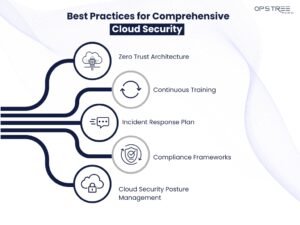
- Zero Trust Architecture: Implement a zero-trust security model where no user or device is trusted by default, even within the network.
- Continuous Training: Regularly train staff on cloud security best practices and emerging threats.
- Incident Response Plan: Develop and test a robust incident response plan to handle potential breaches effectively.
- Compliance Frameworks: Adhere to compliance standards like ISO 27001, HIPAA, or PCI DSS to ensure a strong security posture.
- Cloud Security Posture Management (CSPM): Use CSPM tools to continuously monitor and improve your cloud environment’s security posture.
How OpsTree Can Help Strengthen Your Cloud Security
With years of experience in delivering robust cloud security solutions, OpsTree offers comprehensive cloud risk management solutions to safeguard your cloud deployments.
Our experts specialize in cloud security compliance, ensuring that your infrastructure meets industry standards and regulations. Let us help you address critical vulnerabilities and ensure the security and compliance of your cloud environment. Contact OpsTree today to learn more about our tailored solutions.
Frequently Asked Questions
1. What are the most common vulnerabilities in cloud deployments?
A. The most common vulnerabilities include misconfigured cloud settings, inadequate identity and access management (IAM), insufficient data protection, lack of visibility and monitoring, and vulnerabilities in the shared responsibility model.
2. How can I fix misconfigured cloud settings?
A. To fix misconfigured cloud settings, use automated configuration tools, enforce encryption, adopt the least privilege principle, and conduct regular security audits.
3. Why is data protection crucial in cloud deployments?
A. Data protection is crucial because breaches can result in severe legal, financial, and reputational consequences. Implementing encryption, data classification, and regular backups helps safeguard sensitive information.
4. How can OpsTree help with cloud security?
A. OpsTree offers comprehensive cloud risk management solutions to help organizations secure their cloud deployments. They specialize in cloud security compliance and provide tailored cloud-native infrastructure solutions to strengthen your cloud security.
5. What is the shared responsibility model in cloud security?
A. The shared responsibility model divides security responsibilities between the cloud provider and the customer. Customers must secure their data, applications, and configurations, while the provider manages the infrastructure.