

We’ve all been there. You push some code to GitHub, the CI pipeline turns green, and you cross your fingers hoping the YAML doesn’t explode when it hits the cluster.
For a long time, treating our CI/CD pipelines like glorified, automated bash scripts was just how things were done. But let’s be real—as our Kubernetes setups grew from a single cluster into complex, multi-region beasts, that old “push” model started to fall apart.
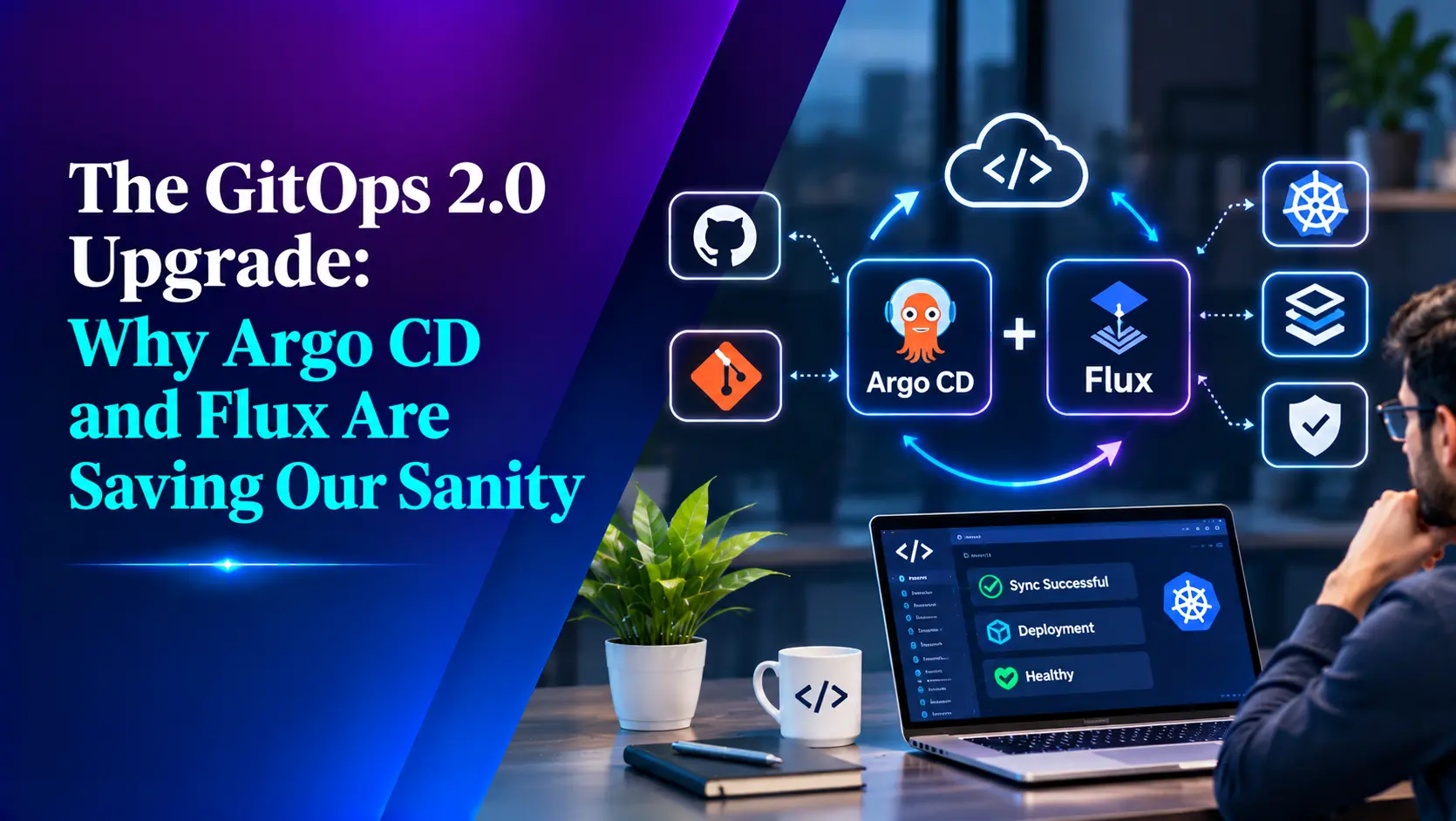
Welcome to GitOps 2.0. Tools like Argo CD and Flux aren’t just trendy deployment utilities anymore; they’re the only things keeping us from managing technical debt by hand. We’ve moved from pushing code into the void to a “pull” model where your Git repository acts as the absolute source of truth. If your cluster isn’t actively fixing itself while you sleep, you’re working way harder than you need to be.
Here’s why the industry has shifted, and why GitOps 2.0 is the new standard.
The Headache of “Pushing” Code
Before GitOps really matured, the standard way to deploy was entirely driven by your CI tool. Your pipeline built an image, grabbed some credentials, and ran a good old kubectl apply.
It worked fine when we only had a handful of microservices. But as things scaled, the cracks started showing:
- The Security Risk: To let your CI system deploy, you had to give it the keys to your production clusters. If your CI server got compromised, your entire infrastructure was vulnerable.
- The “Fire and Forget” Blindspot: Your pipeline only knows that the deployment command didn’t fail. It has no idea if your new MySQL pod actually started successfully, or if it immediately threw an ImagePullBackOff error ten seconds later while you were already moving on to the next task. The pipeline says everything is fine; your pager says otherwise.
- The Drift Catastrophe: This is the big one. Imagine you’re troubleshooting that failing MySQL pod and manually tweak a deployment via kubectl to get things running. Suddenly, your live cluster state doesn’t match what’s in your repository. The next automated deployment will either pave over that late-night fix (causing another outage) or just fail completely. Git was basically just a suggestion.
The Big Upgrades: Why GitOps 2.0 Works Better
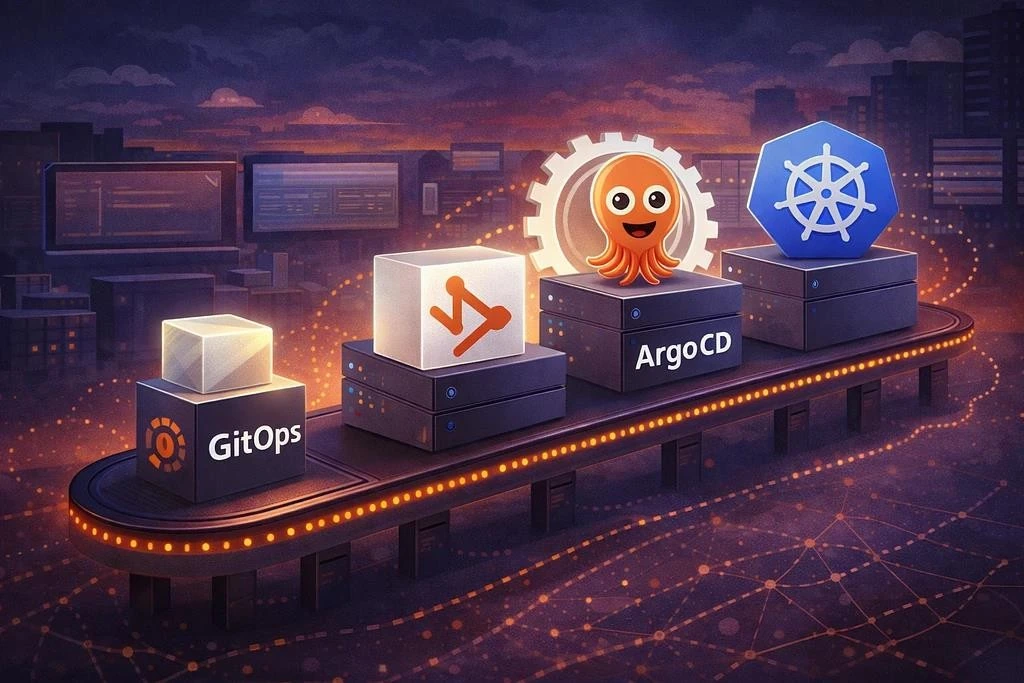
Modern GitOps 2.0 tools aren’t just dumb pipes moving files around. They actively sit inside your cluster and enforce the rules. Here is why they are total game-changers:
Active Drift Detection (aka Self-Healing)
The absolute best part of GitOps 2.0 is the shift from deploying to reconciling.
Instead of pushing changes out, an agent (like Argo CD or Flux) lives inside your cluster and constantly watches your repo. It compares what you want (GitHub) with what you have (the live cluster). If someone tries to manually change a configuration, the tool spots the drift immediately and slaps it back to match the repo. Your infrastructure literally heals itself. You can even hook into the GitHub API to automatically drop a comment on an issue or PR whenever these syncs happen, keeping your whole team in the loop without lifting a finger.
Managing Fleets, Not Just Clusters
Nobody runs just one cluster anymore. You’ve got dev, staging, production, and maybe even edge locations.
Trying to manage 50 different clusters with push scripts is a nightmare. GitOps 2.0 tools are built for this sprawl. You can define a base configuration in your repo once, and watch it seamlessly and securely roll out across hundreds of clusters, applying specific overrides only where needed.
Safer, Smarter Deliveries
We’re finally moving away from crossing our fingers during standard rolling updates. GitOps 2.0 integrates beautifully with progressive delivery tools.
Instead of replacing the old version with the new one all at once, you can set up a Canary deployment. The tool routes 5% of your traffic to the new release, checks your metrics to make sure error rates aren’t spiking, and automatically promotes it if things look good. If things look bad? It rolls it back before your users even notice.
Argo CD vs. Flux: Which Vibe Fits Your Team?
Both of these tools are fantastic, graduated CNCF projects. You honestly can’t go wrong with either, so the choice usually comes down to how your team likes to work.
| Feature | Argo CD | Flux (v2+) |
|---|---|---|
| The Vibe | “Show me everything.” | “Just handle it in the background.” |
| Interface | Gorgeous, real-time Web UI | CLI-first / Git-native |
| Architecture | All-in-one central controller | Highly modular, Unix-style microservices |
| Best For | Teams who want a visual dashboard to see exactly what’s happening across all clusters. | Purists who want lightweight, invisible automation that stays entirely out of the way. |
The Bottom Line
Moving to GitOps 2.0 isn’t just about adopting a new tool; it’s about saving yourself from operational headaches. It takes the dangerous credentials out of your pipelines, gives you self-healing clusters, and finally makes your repo the actual boss of your infrastructure. If you’re still manually wrestling with deployments, do yourself a favor and make the upgrade, your future self will thank you.
Related Searches
- Top Generative AI Development Companies in 2026
- Why Are Enterprise LLM Costs Increasing? A Practical Guide to AI Cost Optimization
- From Customer Feedback to Strategic Action: Building an AI-Powered Feedback Intelligence Agent
- How to Move Agentic AI from Proof of Concept to Production: An Enterprise Implementation Guide