
Minimizing Infrastructure Management with FaaS and Serverless Pipelines
Modern software teams are under constant pressure to ship faster, scale effortlessly, and reduce operational overhead. Traditional infrastructure-heavy approaches often slow teams down with provisioning, patching, and maintenance. This is where serverless computing and CI/CD pipelines come together as a powerful combo.
By leveraging Function-as-a-Service (FaaS) and serverless CI/CD pipelines, teams can focus almost entirely on writing code and delivering value, while the cloud handles the rest.
What Is Serverless Computing?
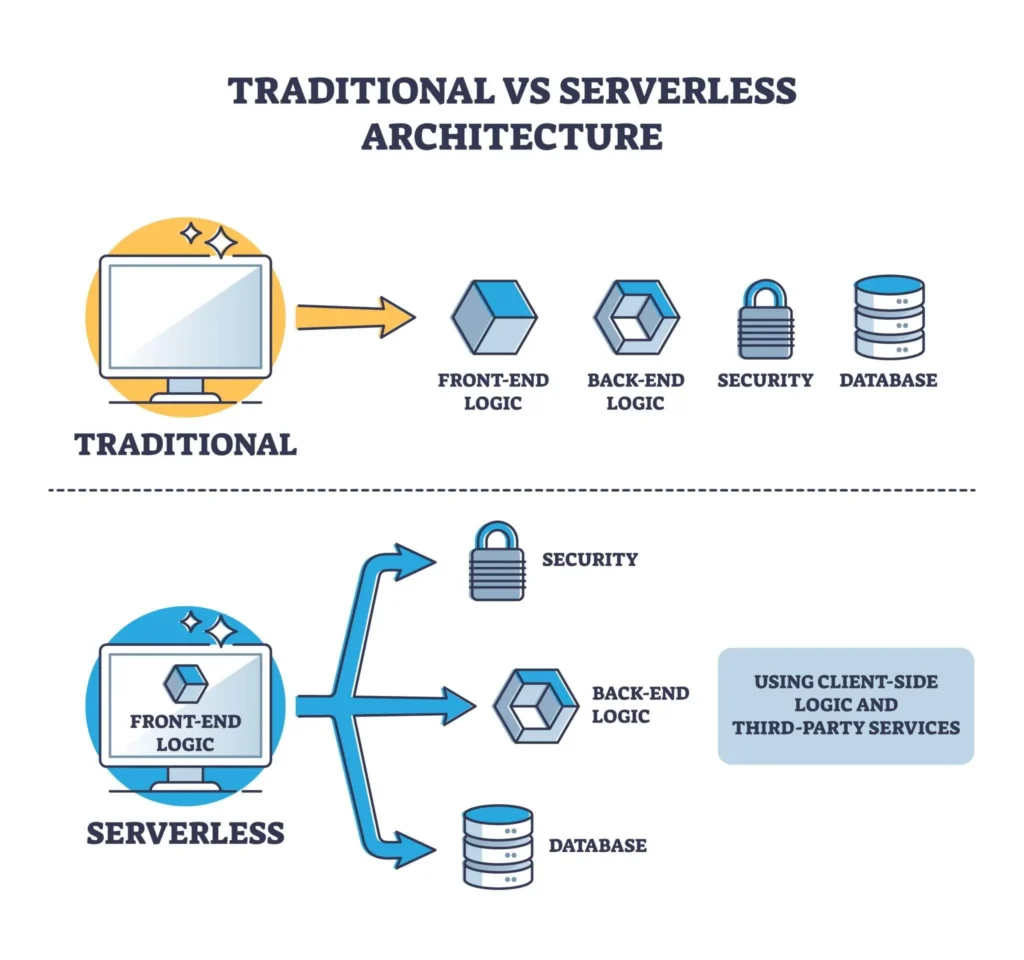
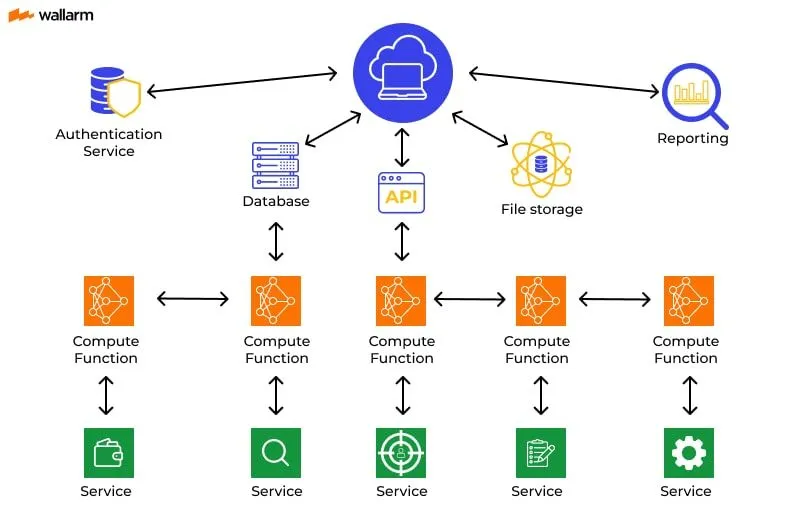
Serverless computing is a cloud execution model where developers deploy code without managing servers or runtimes. Despite the name, servers still exist, but they’re fully abstracted away by the cloud provider.
The most common serverless model is Function-as-a-Service (FaaS).
Key Characteristics of FaaS
- Event-driven execution (HTTP requests, database changes, queues)
- Automatic scaling based on demand
- Pay-per-execution pricing
- No server provisioning or maintenance
Popular FaaS platforms include:
- AWS Lambda
- Azure Functions
- Google Cloud Functions
Why Serverless Changes the DevOps Game
Traditional DevOps involves managing:
- Virtual machines or containers
- OS patches and upgrades
- Capacity planning and scaling
- Idle infrastructure costs
Serverless flips this model on its head.
Benefits at a Glance
- Zero infrastructure management
- Built-in high availability
- Instant scalability
- Lower operational costs
- Faster development cycles
This naturally pairs well with CI/CD automation.
CI/CD in a Serverless World
CI/CD (Continuous Integration and Continuous Delivery) ensures that code changes are automatically tested and deployed. In a serverless setup, pipelines themselves can also be serverless.
Instead of managing build servers, teams rely on cloud-native or SaaS-based CI/CD tools.
Common Serverless CI/CD Tools
- GitHub Actions
- AWS CodePipeline
- GitLab CI/CD
How a Serverless CI/CD Pipeline Works
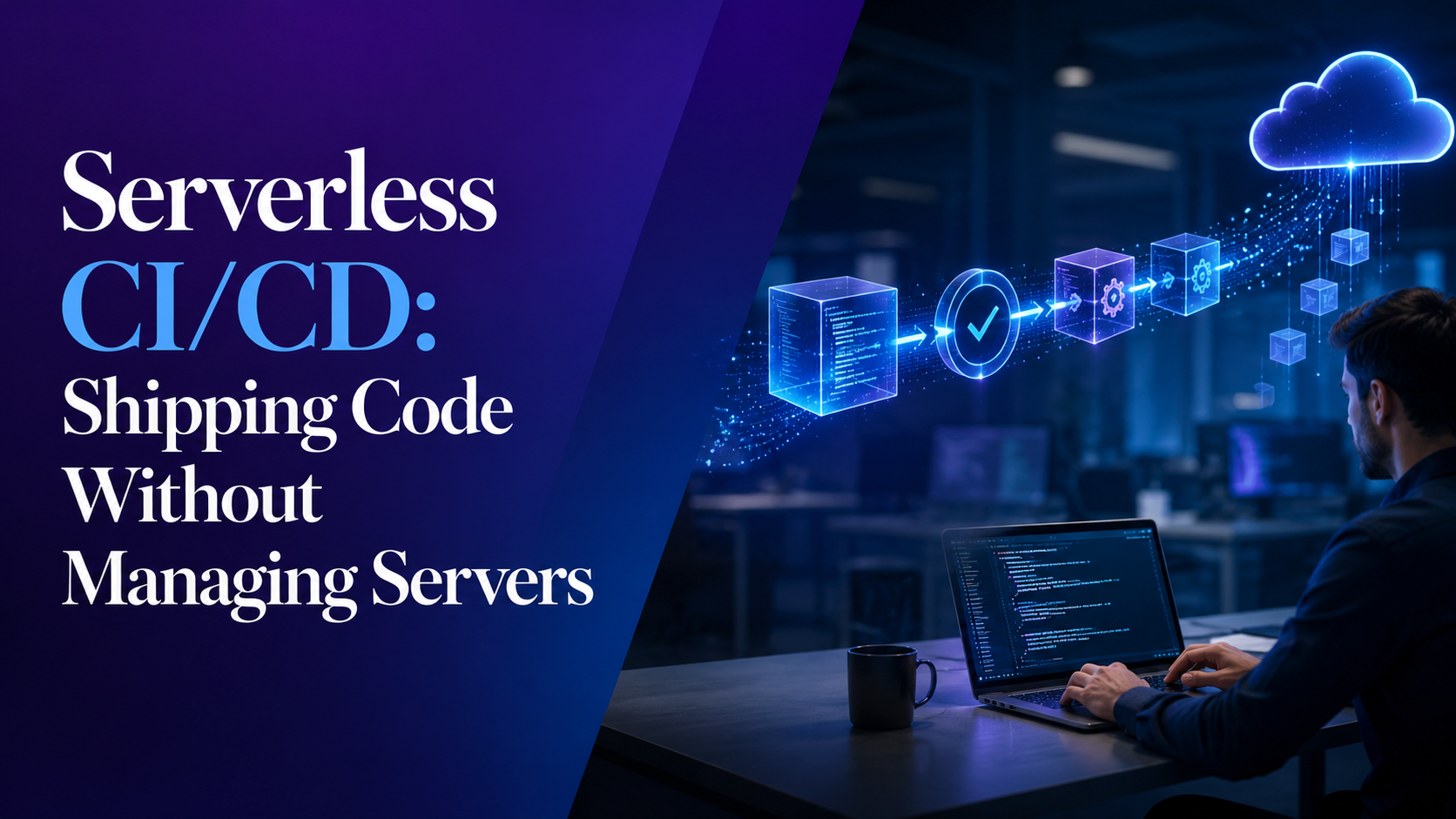
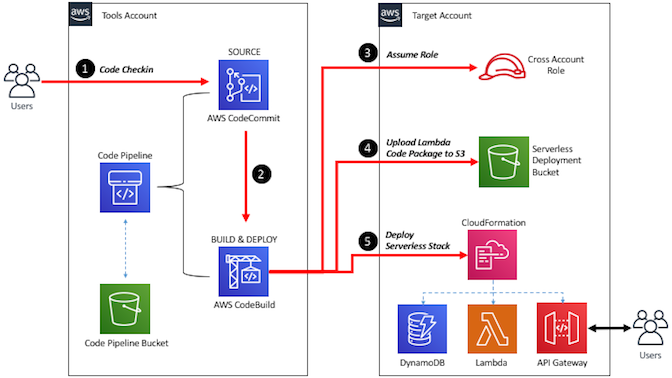
A typical serverless CI/CD flow looks like this:
- Code Commit: Developer pushes code to a Git repository.
- Automated Build & Test: CI tools run tests in ephemeral environments.
- Packaging & Deployment: Functions are packaged and deployed directly to FaaS platforms.
- Instant Scaling & Monitoring: Cloud provider handles scaling, logging, and availability.
No build servers. No deployment machines. No scaling scripts.
Real-World Use Cases
Serverless CI/CD shines in scenarios like:
- Microservices & APIs
- Event-driven data processing
- Scheduled jobs and cron tasks
- IoT backends
- Startup MVPs needing fast iteration
Teams can deploy dozens or hundreds, of small functions independently without worrying about infrastructure sprawl.
Challenges to Keep in Mind
Serverless isn’t magic. A few considerations:
- Cold starts for infrequently used functions
- Observability can be more complex
- Vendor lock-in risk
- Local testing complexity
That said, strong tooling and good architectural patterns mitigate most of these issues.
Best Practices for Serverless CI/CD
- Use Infrastructure as Code (IaC) (Terraform, CloudFormation)
- Keep functions small and single-purpose
- Version and tag deployments
- Automate rollback strategies
- Invest in centralized logging and monitoring
Final Thoughts
Serverless computing and CI/CD are a natural match. Together, they enable teams to:
- Ship faster
- Scale automatically
- Reduce costs
- Eliminate infrastructure headaches
If your goal is to maximize developer productivity while minimizing operational burden, serverless CI/CD pipelines are no longer optional, they’re a competitive advantage.
Related Searches
- A Leading Logistics Platform Achieved 30% Faster Incident Resolution with AI-Driven Observability
- Top 5 Most Reliable CI/CD Platforms Large-Scale Microservices in 2026
- 3× Faster Issue Resolution Through Smarter Operational Intelligence
- devsecops consulting services