

A detailed, real–world comparison of BuildPiper and Spinnaker covering
architecture, features, complexity, governance, use cases, and enterprise
adoption.
Introduction
- Continuous Delivery (CD) is a core capability in modern DevOps- not just
for faster releases, but for safer deployments, governance, and
scalability.
Two platforms often discussed in enterprise CD decisions are: - Spinnaker – a powerful, open–source, multi–cloud deployment
orchestration platform - BuildPiper – a modern, opinionated CI/CD & CD platform focused
on simplicity, standardization, and governance
The real question isn’t which is better, but:
BuildPiper vs Spinnaker – which one fits your organization?
Are you looking for a trusted DevSecOps service provider to secure and scale your business?
What is Spinnaker?
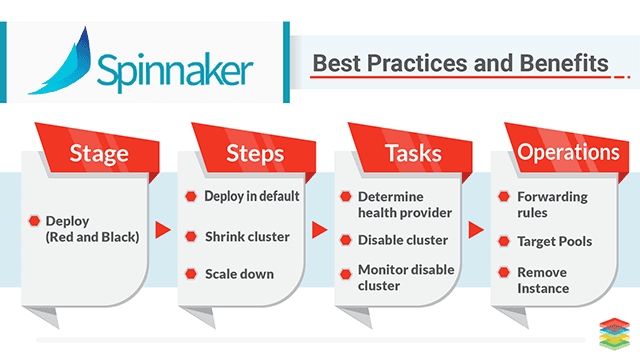
Spinnaker is an open–source Continuous Delivery platform originally
built by Netflix to solve large–scale, high–risk deployments.
It focuses only on CD, not CI
Why Spinnaker Became Famous
- Safe deployments at massive scale
- Zero–downtime releases
- Advanced traffic control
- Multi–cloud deployments
Key Capabilities
- Advanced deployment strategies
– Blue–Green
– Canary (Kayenta)
– Rolling
– A/B testing - Deep Kubernetes object awareness
- Multi–cloud (AWS, GCP, Azure)
- Traffic management & rollback
Challenges
- Very complex architecture
- High operational overhead
- Requires strong SRE + Kubernetes expertise
What is BuildPiper?
BuildPiper is a modern enterprise CI/CD & CD platform designed to solve
a different problem:
“How do we scale CI/CD across hundreds of teams without chaos?”
BuildPiper focuses on standardization, governance, and developer self–
service
Why BuildPiper Became Popular
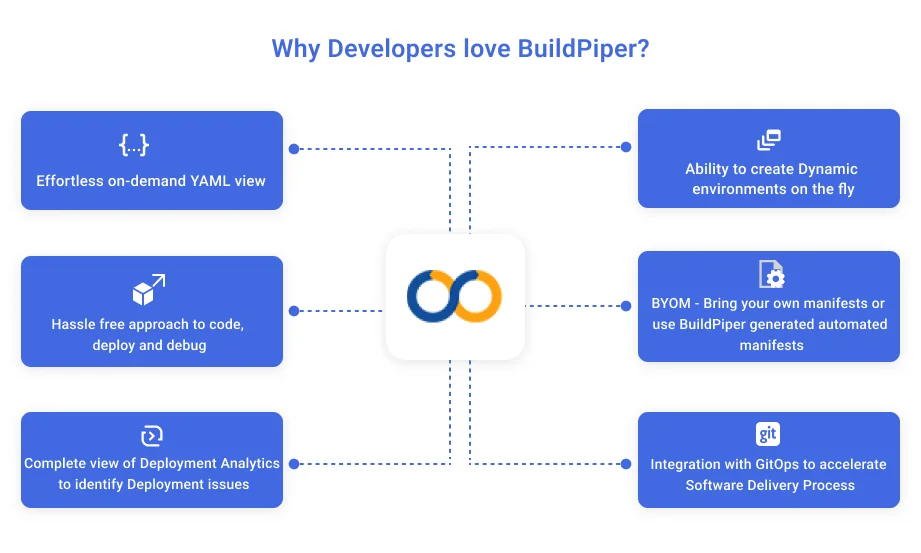
BuildPiper is famous in enterprises because it:
- Reduces pipeline sprawl
- Enforces best practices automatically
- Improves developer productivity
- Simplifies compliance & audits
Key Capabilities
- End–to–end CI + CD
- Opinionated “golden path” pipelines
- Built–in governance & approvals
- Kubernetes–native delivery
- Strong enterprise visibility
Trade–offs
- Less flexibility than Spinnaker
- Opinionated by design
- Smaller ecosystem
BuildPiper vs Spinnaker – Feature Comparison Table
| Category | Spinnaker | BuildPiper |
|---|---|---|
| Primary Focus | Deployment orchestration (CD-only) | End-to-end CI + CD automation |
| Architecture | Distributed microservices architecture | Simplified Kubernetes-native architecture |
| CI Support | External tools only (Jenkins, GitHub Actions) | Built-in CI capabilities |
| Learning Curve | Very steep and complex setup | Low — easier onboarding |
| Governance | Manual or custom policy implementation | Built-in governance and policy controls |
| Developer Experience | Power-user oriented platform | Developer-friendly UI and workflows |
| Flexibility | Extremely high and customizable | Opinionated but faster to implement |
| Operational Effort | High maintenance and operational overhead | Low operational management |
| Ideal Users | SRE and platform engineering teams | Enterprises and DevOps teams |
Architecture Comparison
Spinnaker Architecture
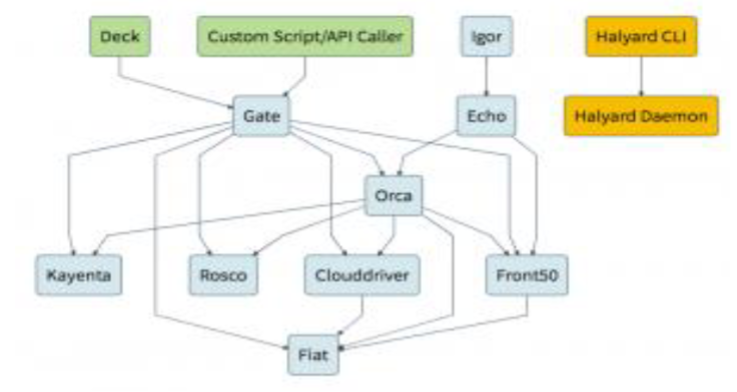
Spinnaker consists of many microservices:
- Gate (API Gateway)
- Orca (Pipeline orchestration)
- Clouddriver (Cloud resources)
- Rosco (Manifest baking)
- Igor, Echo, Front50
Requires:
- Redis
- SQL DB
- Object storage
- Deep Kubernetes knowledge
Highly powerful, but operationally heavy
BuildPiper Architecture
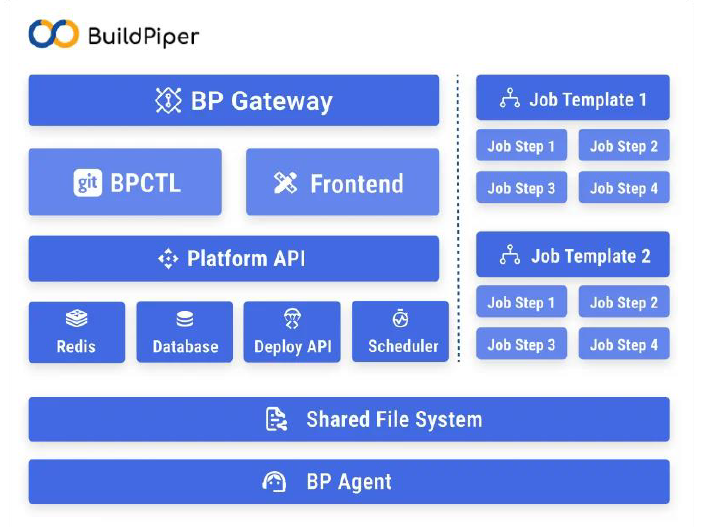
- Kubernetes–native control plane
- Fewer components
- Opinionated workflows
- Centralized governance
➡ Simple, reliable, enterprise–friendly
Winner: BuildPiper (for operability )
Deployment Strategy Comparison
| Strategy | Spinnaker | BuildPiper |
|---|---|---|
| Rolling | Flexible and configurable rolling updates | Simple, standardized rolling updates |
| Blue-Green | Advanced blue-green deployments with traffic control | Opinionated blue-green workflows |
| Canary | Automated canary analysis using Kayenta | Limited support with approval-based rollout |
| A/B Testing | Supported | Not supported |
| Traffic Shaping | Advanced traffic routing and control | Minimal traffic control options |
Winner: Spinnaker
Best for advanced deployment experimentation
Kubernetes Support Comparison
| Aspect | Spinnaker | BuildPiper |
|---|---|---|
| Kubernetes Awareness | Deep | Moderate |
| Helm / Kustomize | Full support | Template-driven approach |
| Manifest Control | Very granular | Standardized |
| Ease of Use | Complex | Simple |
Tie
- Spinnaker → Power & flexibility
- BuildPiper → Consistency & safety
Governance & Compliance
| Capability | Spinnaker | BuildPiper |
|---|---|---|
| Approval Gates | Manual configuration | Built-in approval workflows |
| Audit Trails | Limited visibility | Strong audit logging & tracking |
| Environment Promotion | Custom pipeline design required | Native environment promotion support |
| Enterprise Compliance | DIY implementation | Ready out-of-the-box compliance controls |
Winner: BuildPiper
Operational Overhead Comparison
| Area | Spinnaker | BuildPiper |
|---|---|---|
| Installation | Complex | Simple |
| Upgrades | Painful | Easy |
| Debugging | Hard | Easier |
| SRE Dependency | High | Low |
Winner: BuildPiper
Real–World Case Studies
Case Study 1: Large Enterprise Platform Team
Problem
- Hundreds of microservices
- Inconsistent CI/CD pipelines
- Compliance and audit challenges
- Slow onboarding
Solution
- Adopted BuildPiper
- Standardized pipelines
- Golden paths
- Built–in approvals
Outcome
- Faster onboarding
- Fewer deployment failures
- Strong governance
Case Study 2: Streaming / Tech Company (Netflix–like Scale)
Problem
- Millions of users
- High–risk deployments
- Multi–region Kubernetes clusters
- Need advanced canary analysis
Solution
- Adopted Spinnaker
- Canary deployments
- Automated rollbacks
- Deep observability
Outcome
- Safer releases
- Zero–downtime deployments
- High deployment confidence
When to Choose Which? (Decision Guide)
Choose BuildPiper if:
- You want standardized CI/CD
- Governance & compliance are critical
- You want low operational overhead
- You want fast developer onboarding
Best for:
- Enterprises
- Platform engineering teams
- Regulated industries
Choose Spinnaker if:
- You need advanced deployment strategies
- You run large Kubernetes platforms
- You want fine–grained control
- You have strong SRE maturity
Best for:
- Large tech companies
- Multi–cloud environments
- Advanced DevOps teams
FAQs
1. Is BuildPiper a replacement for Spinnaker?
2. Is Spinnaker still relevant?
delivery.
3. Which is better for beginners?
4. Which tool needs more maintenance?
Related Searches
- Container Scanning Tools: Why They Matter In DevSecOps And How To Choose The Best One
- What Is DevSecOps? A Complete Guide To Secure Software Delivery
- BuildPiper- The ideal Kubernetes & Microservices Application Delivery Platform for your Business!