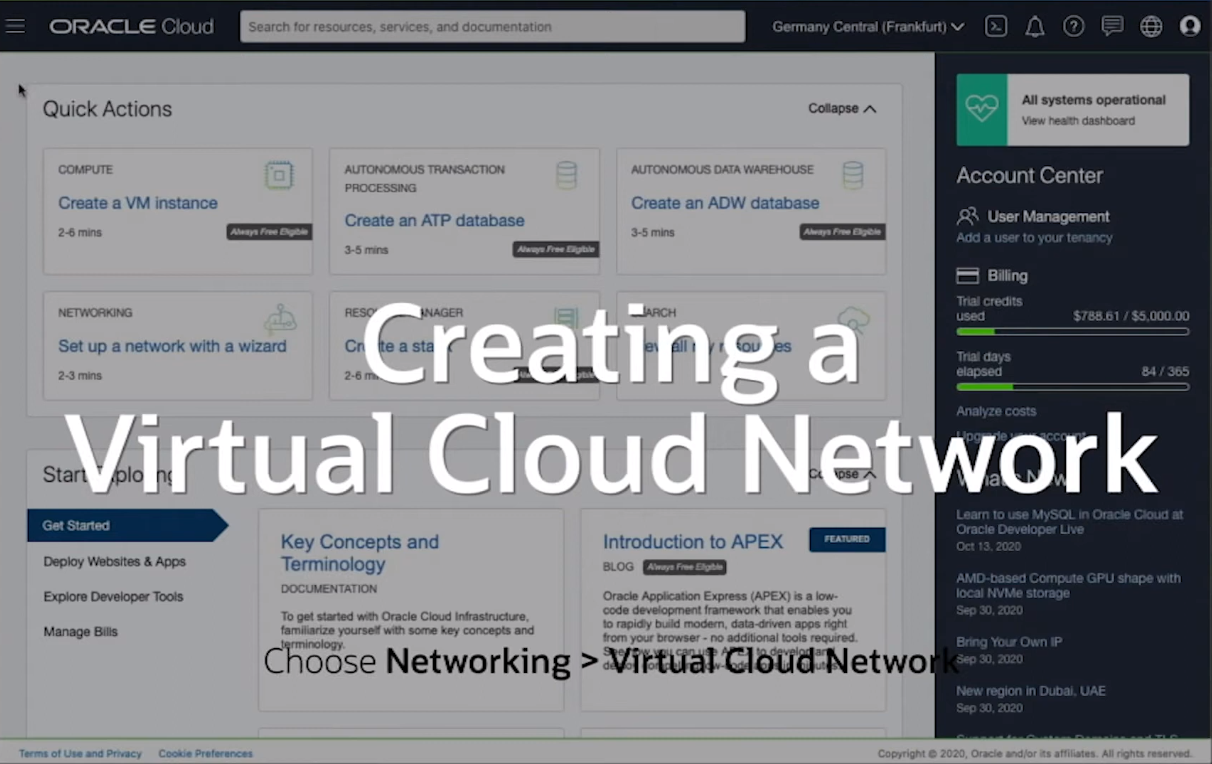
Demystifying OCI’s Virtual Cloud Network: A Deep Dive into VCN Architecture (Part 1)

Introduction to VCN

A Virtual Cloud Network (VCN) is the fundamental building block for networking in Oracle Cloud Infrastructure (OCI). It can be thought of as a virtual version of a traditional network that you’d operate in your own data center. 

The benefits of using a VCN include:
  • Isolation– VCNs provide complete isolation from other virtual networks in the cloud. This allows you to have full control over your network environment.
  • Security– VCNs give you control over security through security lists and network security groups. You can restrict access within subnets as well as between subnets.
  • Customization– VCNs allow you to fully customize the network environment. You can define subnets, route tables, gateways, and other components to meet your specific needs.
The key components that make up a VCN include:
  • Subnets– A subnet is a subdivision of a VCN that allows you to group related resources together. Subnets can be either public or private.
  • Route tables– Route tables control the flow of traffic out of a subnet. They specify the destinations that traffic can be routed to.
  • Security listsSecurity lists act as virtual firewalls that control ingress and egress traffic at the subnet level.

Continue reading “Demystifying OCI’s Virtual Cloud Network: A Deep Dive into VCN Architecture (Part 1)”

Introduction to APM: Unveiling the Basics

Delve into the critical role application performance monitoring plays in the digital world along with its functionalities, benefits and its core components.

The ability to monitor, analyze and enhance the performance of applications has become a critical facet in maintaining a seamless user experience and meeting the ever-growing demands of today’s digital world. As businesses increasingly rely on complex and distributed systems, the need to gain insights into the performance of applications has become paramount.

Delve into the intricacies of Application Performance Monitoring, unraveling its significance in ensuring the application’s reliability, availability and overall efficiency. From understanding the core components of APM to exploring its benefits, we aim to explain in detail the concept of APM, here. In this blog, we’ll talk about the importance, functionalities and pivotal role that application performance monitoring plays in the success of digital initiatives. 

Continue reading “Introduction to APM: Unveiling the Basics”

5 DevSecOps Myths Teams Should Know

Let’s debunk five common DevSecOps myths that might hinder organizations from fully embracing this approach, here, in this blog!

As software development evolves, security becomes an integral part of the process, and yet, myths can hinder progress. While DevOps has significantly improved the efficiency of software delivery, it has also brought about a set of security challenges. DevOps teams must be vigilant in debunking common security myths to ensure that their development processes remain robust and secure. In this blog, we’ll explore five prevalent security myths that DevOps teams need to understand.

Continue reading “5 DevSecOps Myths Teams Should Know”

Step-by-Step Guide to Setup Istio

Understanding Istio and Service Mesh

Istio is a powerful service mesh designed to manage communication between individual microservices seamlessly. Before diving into Istio, let’s grasp the concept of a service mesh.

Service Mesh: A service mesh is a dedicated infrastructure layer that manages communication between microservices. It offers features like load balancing, service discovery, encryption, fault tolerance, traffic management, and more, making it an indispensable component for organizations navigating the complexities of distributed systems.

Continue reading “Step-by-Step Guide to Setup Istio”

Unraveling the Differences between DevOps and GitOps

Discover the key differences between DevOps & GitOps and know which approach aligns best with your organization’s goals.

In the fast-evolving landscape of software development, methodologies and practices are constantly shaping the way teams collaborate and deliver value. Two terms that have gained significant traction in recent years are GitOps and DevOps. While both are geared towards enhancing collaboration and efficiency in software development, they differ in their approaches and key principles. 

Here, in this blog, we’ll unravel the major differences between GitOps and DevOps to help you navigate the complex world of modern software delivery. So, let’s dive into this discussion on DevOps vs GitOps.

Understanding DevOps

DevOps, short for Development and Operations, brings development, IT operations and QA teams together to streamline and automate the software delivery process. DevOps services aim to break down silos, foster continuous communication and automate manual processes to achieve faster and more reliable releases.

Continue reading “Unraveling the Differences between DevOps and GitOps”