CI/CD with GitHub Actions – Concepts

Welcome to the first part of our blog on GitHub Actions!

This blog will delve into fundamental concepts essential for understanding GitHub Actions. Get ready to embark on a journey through the basics, paving the way for the upcoming implementation part of our blog. Stay tuned for hands-on demonstrations and practical applications in the next blog. Let’s dive in!

Continue reading “CI/CD with GitHub Actions – Concepts”

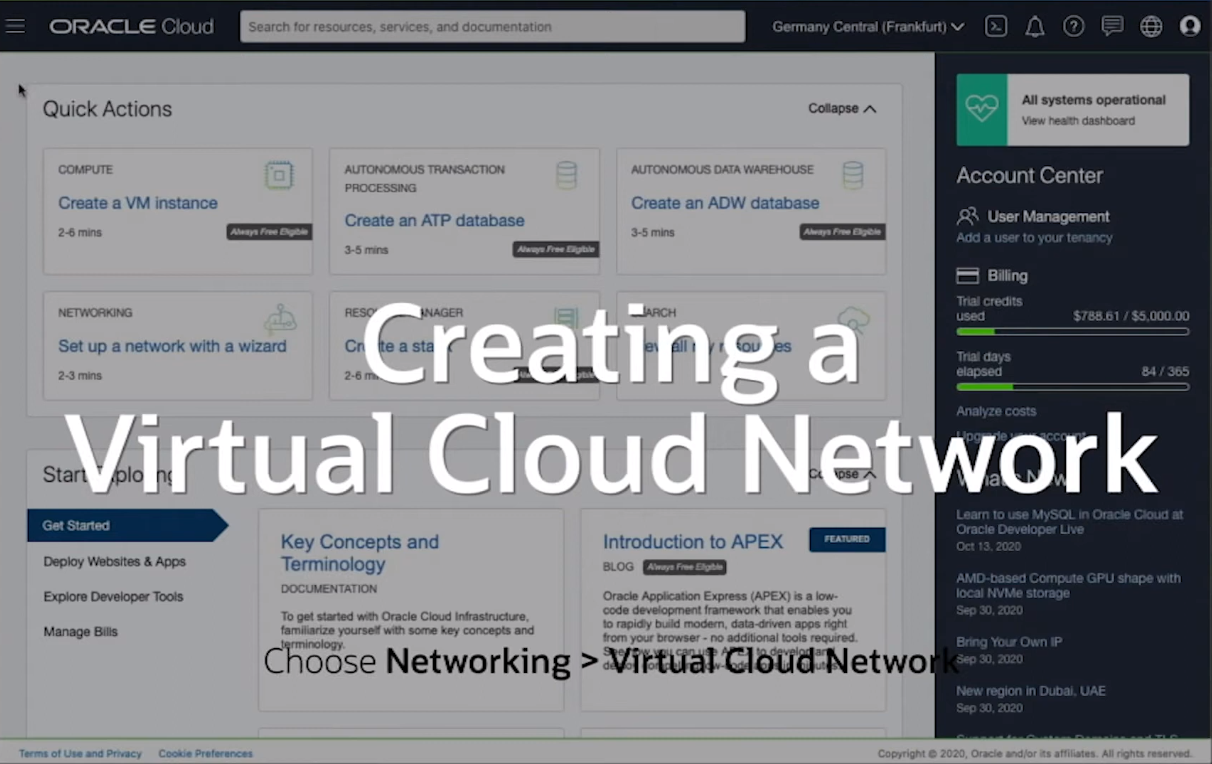
Demystifying OCI’s Virtual Cloud Network: A Deep Dive into VCN Architecture (Part 1)

Introduction to VCN

A Virtual Cloud Network (VCN) is the fundamental building block for networking in Oracle Cloud Infrastructure (OCI). It can be thought of as a virtual version of a traditional network that you’d operate in your own data center. 

The benefits of using a VCN include:
  • Isolation– VCNs provide complete isolation from other virtual networks in the cloud. This allows you to have full control over your network environment.
  • Security– VCNs give you control over security through security lists and network security groups. You can restrict access within subnets as well as between subnets.
  • Customization– VCNs allow you to fully customize the network environment. You can define subnets, route tables, gateways, and other components to meet your specific needs.
The key components that make up a VCN include:
  • Subnets– A subnet is a subdivision of a VCN that allows you to group related resources together. Subnets can be either public or private.
  • Route tables– Route tables control the flow of traffic out of a subnet. They specify the destinations that traffic can be routed to.
  • Security listsSecurity lists act as virtual firewalls that control ingress and egress traffic at the subnet level.

Continue reading “Demystifying OCI’s Virtual Cloud Network: A Deep Dive into VCN Architecture (Part 1)”

Kernel Patching with the help of Loop Script

What is Kernel Patching?

The operating system kernel is the central component that controls system resources and enables hardware and software connection. Kernel patching is the act of changing or maintaining the kernel’s source code.

When to choose this type of patching?

Organizations that are thinking about kernel patching usually assess how well the available solutions work with the particular kernel version they are using, test extensively in a non-production setting, and set up reliable backup and rollback procedures to reduce risks in the production environment.

It’s critical to thoroughly evaluate the organization’s particular requirements and risks, as well as the advantages and disadvantages of kernel patching. Other considerations that might impact the choice include the organization’s overall risk tolerance, regulatory requirements, and how critical the systems are.

Continue reading “Kernel Patching with the help of Loop Script”

Boost Infrastructure Efficiency with AWS ECS Capacity Provider Strategy

Introduction:

Explore the simplicity of scaling in the AWS cloud by diving deep into the AWS Elastic Container Service (ECS) capacity providers. AWS ECS is revolutionizing the world of container orchestration, and capacity providers are essential in streamlining the scaling process.

In this blog, we will explore the concept of Capacity Providers in Amazon ECS. We’ll delve into the reasons for choosing Capacity Providers in Amazon ECS, understand how they function, examine the various types of Capacity Providers, explore the significance of weight and base settings within Capacity Providers, and take a closer look at the potential drawbacks associated with their usage.

What is a Capacity Provider:

Amazon Elastic Container Service (ECS) is a robust container orchestration service offered by Amazon Web Services (AWS), designed to simplify the deployment, management, and scaling of containerized applications. At the heart of ECS lies the concept of Capacity Providers. It’s a fundamental element streamlining the intricate process of managing the compute resources that underpin your containerized workloads.

Continue reading “Boost Infrastructure Efficiency with AWS ECS Capacity Provider Strategy”

Amazon ECR Container Images Across Accounts or Regions

Want to implement an AWS Elastic Container Registry Replication practice in your DevOps solution? But don’t know how to start and where to go. Folks, now you are on the right path.

We’re pursuing this to safeguard our production resources in the ap-south-1 (Mumbai) region from potential disasters and connectivity issues. Ensuring resource distribution across other AWS regions is critical. Our microservices-driven applications rely on Docker images, including custom ones crucial for disaster recovery. AWS Container Registry offers a secure, efficient solution for storing and managing Docker images, simplifying image storage, and enabling seamless sharing across private or public environments.

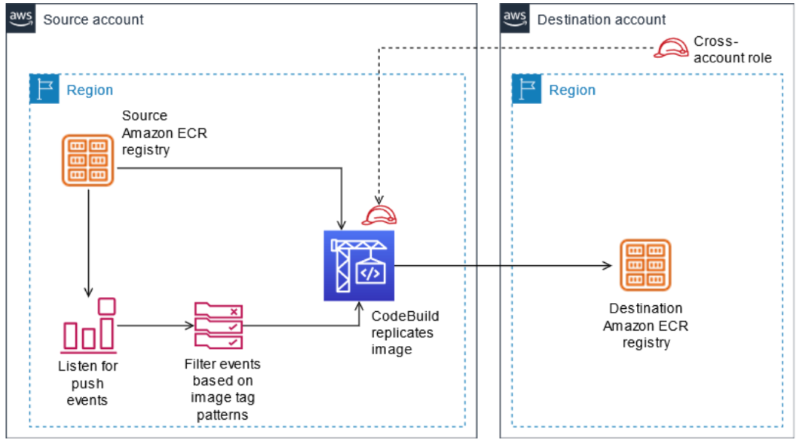
So, here you may wonder how we can replicate the same images from its registry to another AWS Account(cross-accounts) or in the same account in different regions(cross-region).

Pre-requisite: 

  1. Need two AWS Accounts with admin access to Amazon ECR service and programmatic access for it(to pull/push images).
  2. Login/Signup:  https://aws.amazon.com/console/

Note: 1st AWS Account: Source account

2nd AWS Account: Destination account

The architecture

Enough theory part let’s take action for this,

Continue reading “Amazon ECR Container Images Across Accounts or Regions”