

AWS Gateway LoadBalancer: A Load Balancer that we deserve

Nowadays, LoadBalancing is one of the basic needs for the application systems to perform optimally while considering some important factors like- scalability and high availability. Every cloud is providing LBaaS (LoadBalancing as a Service) as an offering so the consumers don’t have to worry about the setup and management of load-balancers by themselves.

But it’s not like that cloud is offering a single type of load balancer for every use case because for different use-case we require a different type of load balancer. For example- we have different load-balancers for Layer4 and Layer7 level traffic.

Recently AWS had a new family member in their load-balancer family and they named it “Gateway Load Balancer“. So gateway load-balancer is a load-balancing service provided by AWS to send traffic to the different appliances, applications, firewalls, etc. that are not part of the current VPC.

Continue reading “AWS Gateway LoadBalancer: A Load Balancer that we deserve”
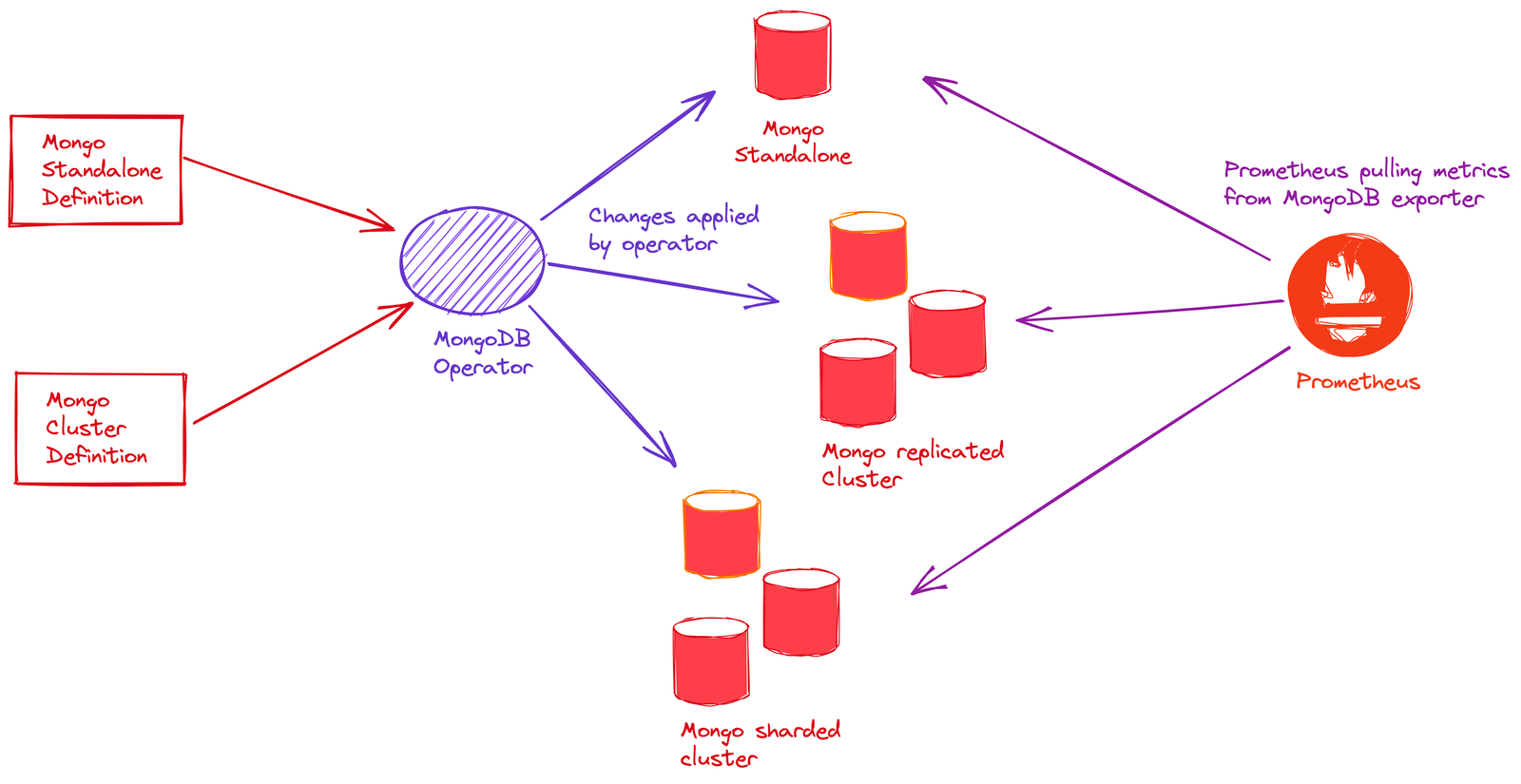
MongoDB Setup on Kubernetes using MongoDB Operator

MongoDB is a popular NoSQL database that supports large as well as small size of datasets. Just like any other database standalone setup, MongoDB is straightforward but we have to make a replicated or shared cluster of MongoDB, and there we have certain complications. Especially if we are doing these kinds of setups in orchestration tools like Kubernetes.

There is a lot of complexity in setting up MongoDB on Kubernetes that people(including me) have faced for a long time which I would like to highlight:-

  • Standalone setup is pretty straightforward but for replicated and sharded clusters additional mongo configurations are required.
  • In the replicated scenario, separate configurations need to be managed for the leader and follower.
  • Monitoring and access management of MongoDB inside Kubernetes is a little tricky part to handle.
Continue reading “MongoDB Setup on Kubernetes using MongoDB Operator”

Autoscaling in Nomad Cluster

We are living in the microservice era, where we have a number of applications to support a business model. But our application success cannot be determined by the features only, it should have a scalable model as well. Otherwise, something like this would happen:-

When we generally talk about the scaling in the microservices, people think that applications that are running inside Kubernetes as containers. Since Kubernetes has its own method of autoscaling using the metrics-server, we don’t have to worry about the scaling of the applications inside it.

Continue reading “Autoscaling in Nomad Cluster”

How To Debug a Bash Shell Script?

What is Shell?

The UNIX shell program interprets user commands which are either directly entered by the user, or which can be read from a file called the shell script or shell program. Shell scripts are interpreted, not compiled. The shell reads commands from the script line per line and searches for those commands on the system. Continue reading “How To Debug a Bash Shell Script?”

Using TruffleHog Utility in Your Jenkins Pipeline

Introduction

This is a quick blog on how we can use the TruffleHog utility in our Jenkins pipeline to search for the secrets, passwords, sensitive keys which may have been accidentally committed in our repositories.

TruffleHog proves to be a great tool in helping us to fetch the sensitive data from our repositories which we do not want to expose at any cost.

Before moving further with this blog, I would like you all to take a look at the prerequisites that are mentioned below.

Continue reading “Using TruffleHog Utility in Your Jenkins Pipeline”