The Fallacies of Platform Engineering

Delve into the intricacies of implementing platform engineering strategies and the misconceptions that surround it.

In today’s rapidly evolving tech landscape, the significance of platform engineering cannot be overstated. It serves as the bedrock upon which countless digital ecosystems are built, from mobile applications to cloud-based services and everything in between. Yet, for all its importance, the world of platform engineering is riddled with misconceptions & misunderstandings that can lead to costly mistakes, project delays and suboptimal outcomes. To navigate this complex terrain successfully, it is crucial to identify and address these fallacies head-on.

By exposing these fallacies and offering insights into platform engineering best practices, we aim to empower engineers, developers and decision-makers to make more informed choices and in turn, create more robust and effective platforms.

Throughout this exploration, we’ll delve into the intricacies of implementing platform engineering strategies, examining its core principles and the misconceptions that surround it. We’ll also discuss real-world examples and case studies to illustrate the consequences of falling prey to these fallacies. 

Continue reading “The Fallacies of Platform Engineering”

PRTG Network Monitor: Why and How?

In today’s highly interconnected and technology-driven world, maintaining a stable and efficient network infrastructure is crucial for businesses of all sizes. Network & infra-monitoring tools play a vital role in ensuring the smooth operation of infrastructure by providing real-time visibility into system and network performance, identifying bottlenecks, and enabling proactive troubleshooting.

PRTG Network Monitor stands out as a powerful and easy-to-use tool that simplifies the monitoring process and empowers administrators to keep their environment running smoothly. In this blog post, we will explore the features and benefits of PRTG Network Monitor.

What is PRTG?

PRTG Network Monitor, developed by Paessler AG, is a robust and user-friendly network monitoring tool that offers a wide range of features to effectively monitor network devices, servers, and applications. With its centralized monitoring system, PRTG provides administrators with a holistic view of their network infrastructure, allowing them to detect and resolve issues before they impact users or cause downtime.

Why PRTG Stands Out in the Competition?

Continue reading “PRTG Network Monitor: Why and How?”

Protected EFK Stack Setup for Kubernetes


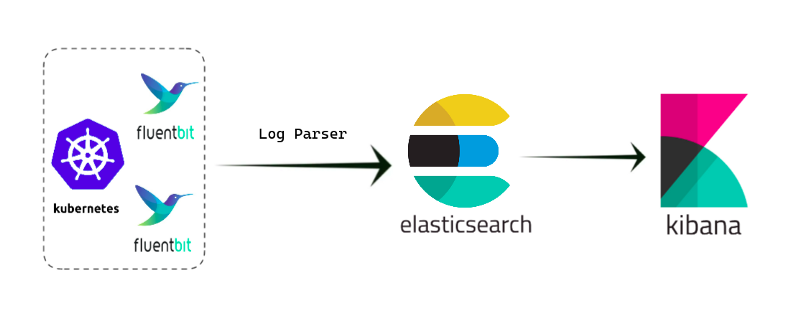
In this blog, we will see how we can deploy the Elasticsearch, Fluent-bit, and Kibana (EFK) stack on Kubernetes. EFK stack’s prime objective is to reliably and securely retrieve data from the K8s cluster in any format, as well as to facilitate anytime searching, analyzing, and visualizing of the data.

What is EFK Stack?

EFK stands for Elasticsearch, Fluent bit, and Kibana.

Elasticsearch is a scalable and distributed search engine that is commonly used to store large amounts of log data. It is a NoSQL database. Its primary function is to store and retrieve logs from fluent bit.

Fluent Bit is a logging and metrics processor and forwarder that is extremely fast, lightweight, and highly scalable. Because of its performance-oriented design, it is simple to collect events from various sources and ship them to various destinations without complexity.

Continue reading “Protected EFK Stack Setup for Kubernetes”

All Redis Setup Under 7 Minutes!

Redis is a popular open-source in-memory database that supports multiple data structures like strings, hashes, lists, and sets. But similar to other tools, we can scale standalone Redis to a particular extent, but not beyond that. That’s why we have a cluster mode setup in which we can scale Redis nodes horizontally and then distribute data among those nodes.

Generally, we categorize the Redis setup into three different types:

  • Standalone
  • Leader-Follower (Replication)
  • Leader-Leader(Sharding)

Standalone Setup

In a Standalone setup, the complexity is minimal, but we cannot scale the solution if the data increases. Also, the fail-over and high availability will not be supported inside it.

Continue reading “All Redis Setup Under 7 Minutes!”

Deploying Prometheus and Grafana on Kubernetes

Monitoring a Kubernetes Cluster is the need of the hour for any application following a microservices architecture. There are a bunch of solutions that one can implement to monitor their Kubernetes workload and one of them is Prometheus and Grafana. This article will help you to deploy Prometheus and Grafana in your kubernetes cluster with the help of prometheus-operator.

But before setting up these components let’s understand a bit about each of them.

Prometheus

Prometheus is a pull-based open-source monitoring and alerting tool originally built by SoundCloud. It works on a time-series database and scrapes metrics at a given interval from HTTP endpoints. After Kubernetes, Prometheus joined the Cloud Native Computing Foundation in 2016 as the second hosted project.

Alertmanager

The Alertmanager takes care of alerts sent by alerting tools such as the Prometheus server. It handles grouping, silencing, and routing them to the correct receiver integration such as email, PagerDuty, Slack, etc. It also supports the inhibition of alerts.

Grafana

Grafana is the visual representation of metrics collected by a data source which in our case happens to be Prometheus. We can create or import dashboards for grafana which will make use of promQL to visually represent metrics collected by Prometheus.

Continue reading “Deploying Prometheus and Grafana on Kubernetes”