
Nowadays, it is very common to run applications on Spot instances. In this scenario, where a spot instance could be terminated at any point of time because of AWS pulling back their resource or ASG Scale-In incident, we need to have something in place to handle the termination smoothly so that we can complete our final tasks before the system shutdown. It could be executing some scripts, unmounting some storage device, shipping final log files to S3, or uploading cache data in a centralized server like Redis.
Today, I will attempt to cater to this problem.
First of all, let’s think of trying to run a custom script prior to shutdown in our local system. If everything works fine, the same would be applicable for ec2 spot instances too.
Category: DevOps
Autoscaling in Nomad Cluster
We are living in the microservice era, where we have a number of applications to support a business model. But our application success cannot be determined by the features only, it should have a scalable model as well. Otherwise, something like this would happen:-

When we generally talk about the scaling in the microservices, people think that applications that are running inside Kubernetes as containers. Since Kubernetes has its own method of autoscaling using the metrics-server, we don’t have to worry about the scaling of the applications inside it.
Continue reading “Autoscaling in Nomad Cluster”How to Build a Successful DevSecOps Pipeline?
Introducing DevSecOps!
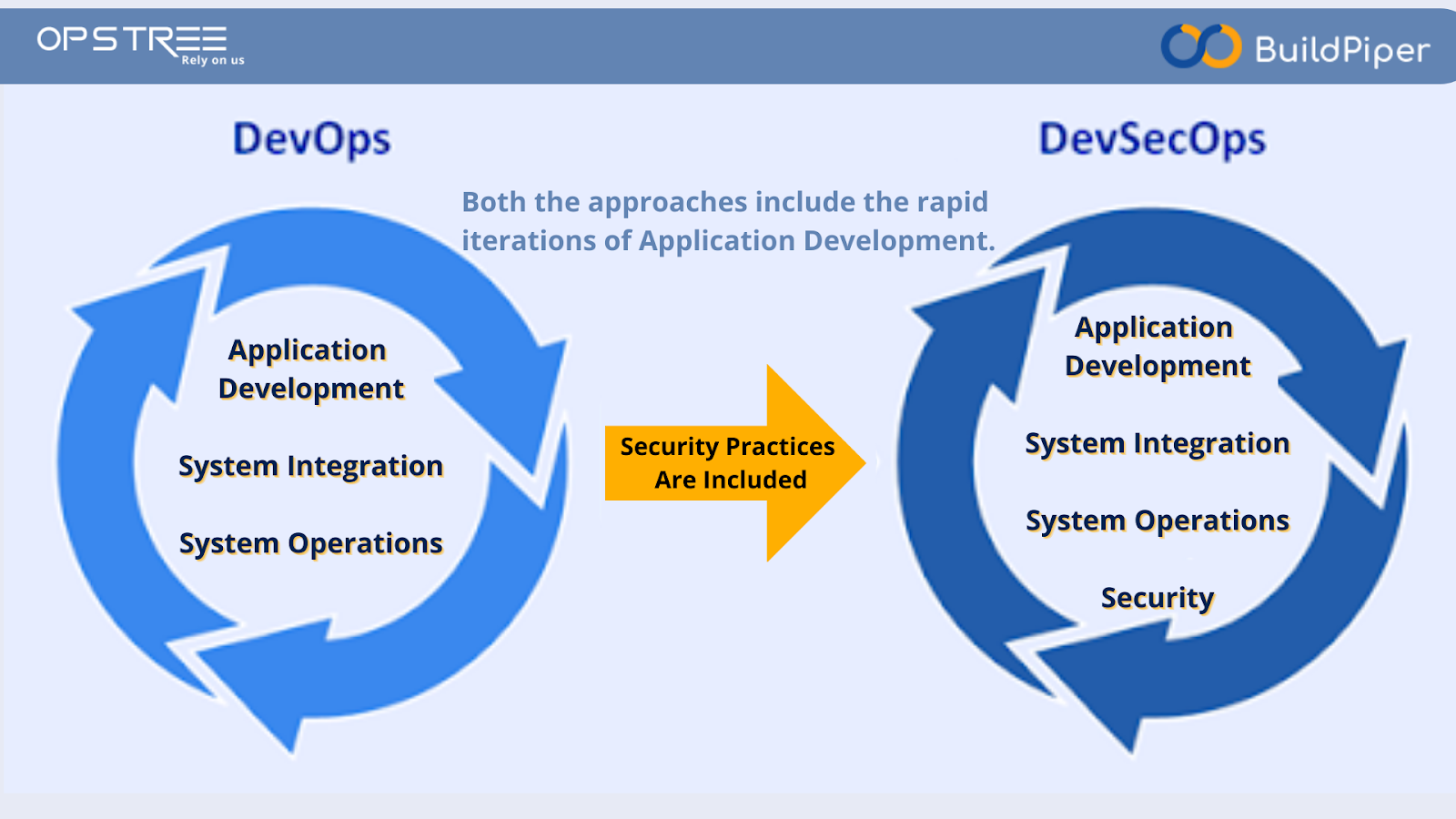
With critical DevSecOps services coming to the fore, businesses have actually begun to realize how important it is to ensure security within each stage of the DevOps lifecycle. But still, there are many who do have proper clarity on the difference between DevOps and DevSecOps. No matter, you call it “DevOps” or “DevSecOps,” the term is related to the process of including security practices as a major part of the entire app life cycle.
DevSecOps, in simple words, means development, security and operations. It’s a process of implementing security practices and actions in the DevOps lifecycle. It’s all about embedding security features and enhanced automation throughout the CI/CD pipeline for removing mistakes and reducing attacks & downtime.
The Step-By-Step Guide to Connect Aws with Azure
As we all know AWS and Azure are the two Cloud providers and there can be possibilities that one of our services is running on one cloud provider and the other is running on another cloud provider and, both are dependent on each other.
Through this blog, I will guide you on the steps which will be needed for connecting AWS with Azure and also will be explaining all the components of both the cloud provider that will be required for creating the site-to-site VPN Connectivity.
Why are we trying to connect both?
In one of my projects, I met with a requirement where I was working on an application that follows a client-server architecture. There were servers connected to multiple clients. Initially, the Server was placed into AWS and the connected clients were also there, but after a couple of years our requirements got changed and a new business unit came into the picture with its own clients that were needed to be connected with the server present in the AWS cloud.
Now, these new clients were present on Azure but the server was on AWS. Migration of server was not an option for us because our customer was not ready to migrate those clients from Azure to AWS, so this was a completely new use case, to which we decided to connect both the cloud providers with each other by setting up IPSec VPN tunnel.

HOST-BASED INTRUSION DETECTION USING OSSEC
What is Ossec :
It claims to be the world’s most widely used open-source host-based intrusion detection system. In short, we can call it HIDS. It performs log analysis, integrity checking, Windows registry monitoring, rootkit detection, time-based alerting, and active response. This is made up of two parts: Ossec server and Ossec agent. The Ossec server is used to monitor other servers that we call Ossec agents. At any time, an agent can be added to the Ossec server for its monitoring and can be removed. For that, server and agent connections need to be established, which we will be discussing. It also provides a Web interface for showing all alerts, logs, and agent information.
Possible scenarios that you might face of Intrusion on your servers:

1) Attacker launched a brute force attack against your machine. Now you need to track him. For that, you need his IP address. First, on your Ossec server, do:
cat/var/ossec/logs/alerts/alerts.log
Where you find Source IP against the alert of SSH insecure connection attempt rule. Secondly, we can get it from a UI-based alert.
Continue reading “HOST-BASED INTRUSION DETECTION USING OSSEC”