

Kubernetes: DaemonSet

Introduction

Kubernetes is one of the widely used orchestration tools for container application and container management. With a variety of features and options, it helps organizations remove manual intervention at every stage. With lots of requirements & scenarios, the user or any organization deals with lots of Kubernetes resources types options which leads to having proper knowledge of every Kubernetes resources type to fit specific or combination of resources with different scenarios that organizations generally require. To know more about different Kubernetes resource types, you can visit the official documentation provided by Kubernetes. Continue reading “Kubernetes: DaemonSet”
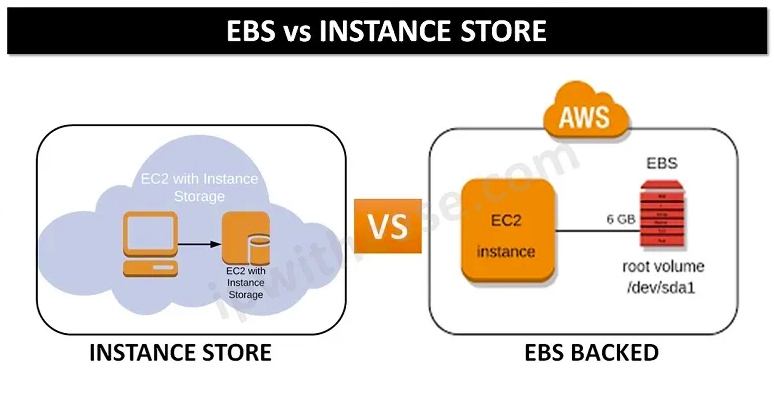

EC2 STORE OVERVIEW- Difference B/W AWS EBS And Instance Store

Introduction to EC2 Storage-

Amazon EC2 provides you with flexible, cost-effective, and easy-to-use data storage options for your instances. EC2 basically provides two types of block-level storage. Instances can either be launched with Elastic block storage volume (EBS volume) or Instance store-backed volumes as to their root volumes. Each option has a unique combination of performance and durability. But Aws recommends using EBS storage-backed AMIS as they get launched faster and provide persistent storage. 


Continue reading “EC2 STORE OVERVIEW- Difference B/W AWS EBS And Instance Store”

How To Debug a Bash Shell Script?

The fastest way to debug a Bash script is to enable debug mode. This prints each command before execution, helping you find problems. 

In this tutorial, we’ll explore various techniques for debugging Bash shell scripts. Although the Bash shell doesn’t have a built-in debugger, we can effectively use certain commands and constructs to aid in this process. First, we’ll understand how to use the set command for script debugging. Next, we’ll discuss specific uses of the set and trap commands. Finally, we’ll outline some strategies for debugging a script that’s already running.

What is Shell?

The UNIX shell program interprets user commands which are either directly entered by the user, or which can be read from a file called the shell script or shell program. Shell scripts are interpreted, not compiled. The shell reads commands from the script line per line and searches for those commands on the system. Continue reading “How To Debug a Bash Shell Script?”

An Introduction to Kubernetes Architecture! 

Kubernetes is an open-source container orchestration platform used for running distributed applications and services at scale. Merely knowing the basics of Kubernetes won’t be sufficient enough in order to leverage the many advantages that it offers. It’s important to first understand the complete Kubernetes architecture, its components and how they interact with each other to know how Kubernetes actually works. Let’s take a brief look and explore how the different components of Kubernetes work together.

Kubernetes is the ideal solution for complete orchestration, scaling and deployment of containerized applications. You can also read about application containerization, Kubernetes API, Kubernetes API Gateway and much more here!

Continue reading “An Introduction to Kubernetes Architecture! ”

AWS SECRET MANAGER


Introduction

Most of the IT companies are working or are migrating their infrastructure to the cloud environment for cost reduction, high availability, data security, and hassle-free setup. Companies create or use applications/databases on the cloud, where they need to authenticate via secrets (or credentials). These days protection of passwords is one of the challenges, and hard-coding the secrets into the system would be a major security issue. Hence, we can make use of the AWS service named Secret Manager that will be responsible for the management of secrets.

What is a Secret?

A secret is not just a pair of usernames and passwords. It might contain a set of credentials holding key-value pairs or connection details to access the related services. In AWS Secret manager, a secret has metadata:

An Amazon Resource Name, name of the secret, a description, a resource policy, and tags, ARN for an encryption key (an AWS KMS key that Secrets Manager uses to encrypt and decrypt the secret value), Information of rotation of secret.

Continue reading “AWS SECRET MANAGER”